
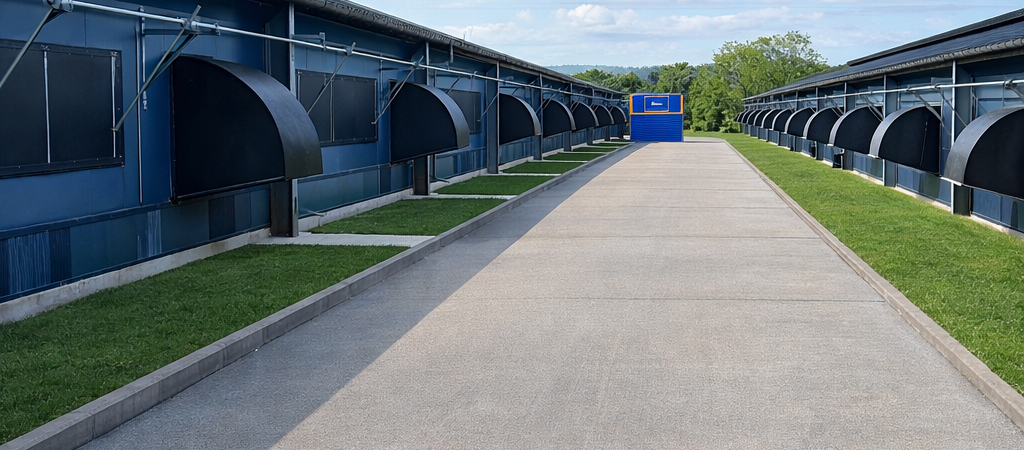
The aim of the redesign was to enhance the system's efficiency, improve heat delivery to the chicken sheds, and reduce unnecessary energy usage.
Project Overview
Zeroridge Consulting was commissioned to redesign and upgrade the existing heating infrastructure at Manor Farm to support expansion to eight poultry sheds while resolving significant performance and efficiency issues within the current system.
The Challenge
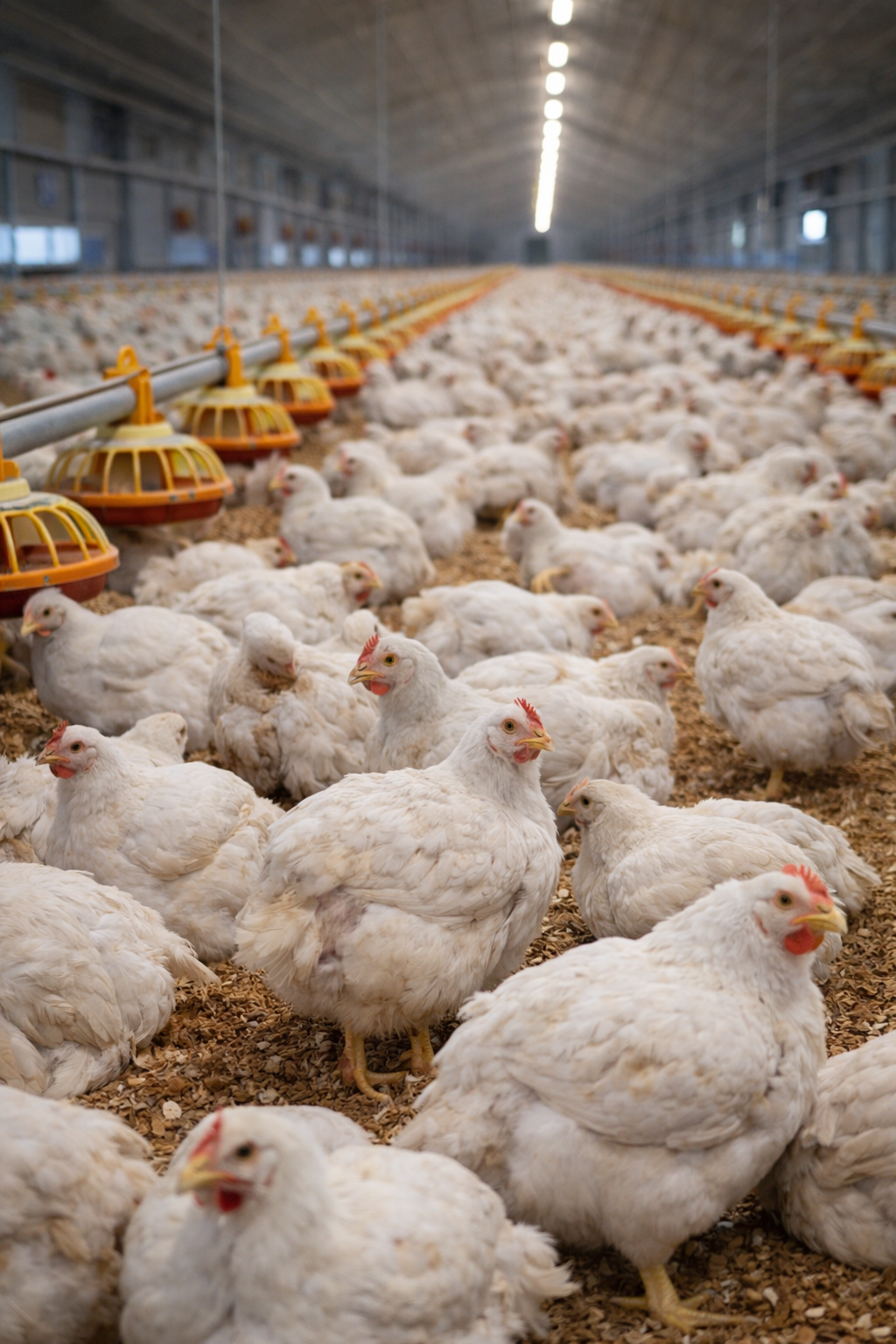 The farm’s existing heating system was underperforming due to fundamental hydraulic design flaws. Heat distribution across sheds was inconsistent, particularly during peak demand, impacting bird welfare and productivity. High return temperatures were reducing boiler efficiency, increasing fuel consumption, and causing excessive boiler cycling and wear.
Additional challenges included:
- Poor utilisation of available heat from the on-site Anaerobic Digestion (AD) plant
- Inefficient Delta T control
- Imbalanced flow distribution across sheds
- Undersized internal pipework limiting water volume and speed
- High electricity demand from extended pump and boiler run times
- Limited system reporting and performance visibility
To support future expansion and ensure long-term reliability, a complete hydraulic rethink was required.
The Solution
Boiler Room Redesign & Master Buffer Integration
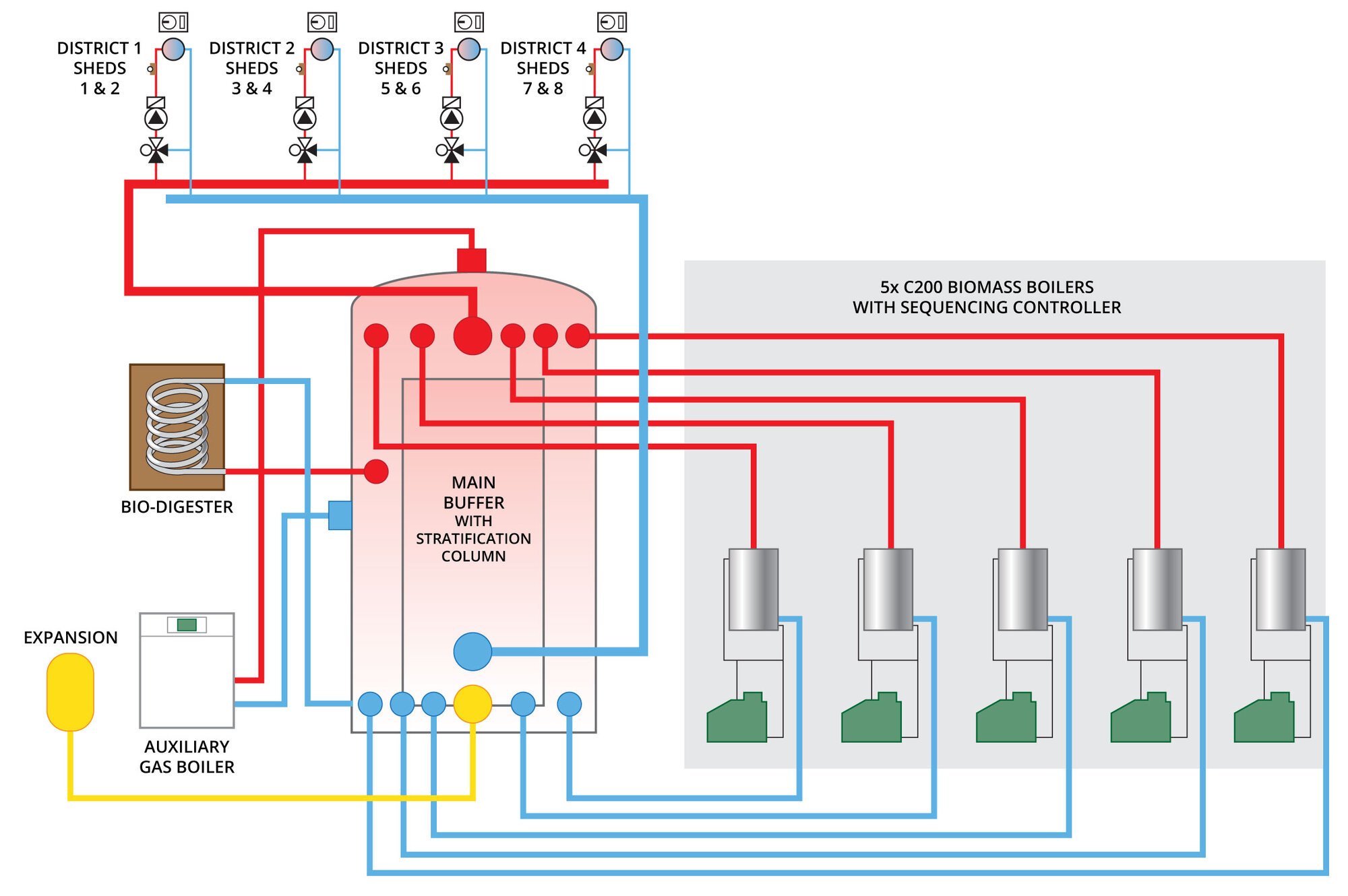
The upgrade began with significant boiler room alterations. The existing low-loss header was removed and replaced with a purpose-designed master buffer system capable of integrating multiple heat sources.
The new heat production hierarchy was designed as:
- Primary: AD Plant
- Secondary: Biomass Boilers (HDG sequenced control)
- Peak & Backup: 1,000kW Gas Boiler
The gas boiler operates automatically when renewable sources cannot meet demand and serves as a fully integrated backup system. All heat sources feed into a 16,500-litre master buffer, controlled via an HDG touchscreen controller with remote access capability.
This multi-tiered approach ensures maximum renewable utilisation while maintaining operational reliability.
District Pipe Reconfiguration
A key issue was the inability to deliver sufficient flow to sheds furthest from the plant room. Water naturally followed the path of least resistance, starving distant heaters of heat.
To resolve this, we:
- Created separate district heating circuits for sheds 1–4 and sheds 5–8
- Installed new insulated underground district pipework
- Reallocated existing pipework to improve distribution
- Installed four new high-efficiency district pumps (plus one shared spare)
This effectively split the system into balanced districts, improving flow rates and ensuring consistent heat delivery across all sheds.
Internal Pipe Sizing & Dynamic Balancing
Detailed pipe sizing calculations revealed significant undersizing within sheds, particularly 28mm branch connections feeding multiple heaters. These restrictions prevented adequate water volume and speed.
Upgrades included:
- Increasing internal pipe diameters in critical sections
- Installing dynamic balancing valves with isolation
- Replacing flexible heater connections with PTFE-lined, stainless steel braided hoses
- Removing redundant two-port valves
- Adding isolation valves for improved maintenance flexibility
These measures ensure balanced flow to every heater while reducing system resistance and improving Delta T performance.
Control & Monitoring Improvements
The installation of a new HDG touch screen control interface provides:
- Real-time performance monitoring
- Improved Delta T management
- Optimised boiler sequencing
- Remote access and alert functionality
Integration with the AD plant ensures heat is prioritised efficiently, with automatic pump modulation and buffer temperature control.
The Outcome
The completed upgrade delivers:
- Balanced heat distribution across all eight sheds
- Improved Delta T and lower return temperatures
- Reduced fuel and electricity consumption
- Extended boiler lifespan through reduced cycling
- Increased renewable heat utilisation
- Improved system visibility and control
- Infrastructure designed to support future expansion
By combining hydraulic correction, intelligent control, and strategic district redesign, Manor Farm now benefits from a future-proofed, energy-efficient heating system that enhances animal welfare, operational reliability, and long-term cost performance.
Owner Feedback
Julie, the owner of the farm, highlighted the significant impact the system has had on bedding quality at the end of each crop. She noted that conditions are now consistently very dry, ideal for bird welfare and overall shed hygiene. In fact, the cleaning crew have commented that bedding is now almost too dry and dusty compared to previous crops, which is a clear indication of how effectively moisture is being controlled.
The results have been extremely positive: bird health has improved considerably, feed conversion ratios have strengthened, and mortality rates have reduced. Julie expressed that she is “very happy with the results,” reflecting the tangible operational and welfare benefits delivered by the upgraded heating system.
Owner Feedback
- The results have been extremely positive: bird health has improved considerably, feed conversion ratios have strengthened, and mortality rates have reduced. Julie expressed that she is “very happy with the results,” reflecting the tangible operational and welfare benefits delivered by the upgraded heating system.
The aim of the redesign was to enhance the system's efficiency, improve heat delivery to the chicken sheds, and reduce unnecessary energy usage.

Renewable energy at an industrial scale, whether for offices, hospitals, schools, estates, retail, industrial or commercial applications as well as social and district heating schemes.